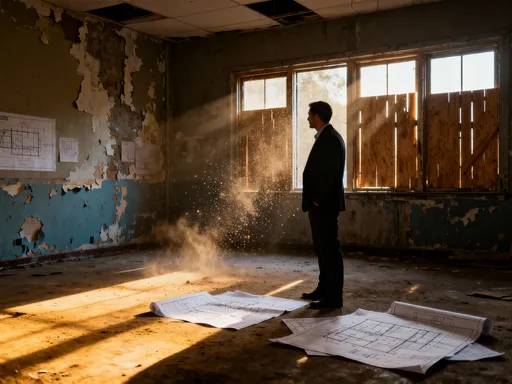
What I Learned the Hard Way About Commercial Property Risks
Investing in commercial property seemed like a smart move—steady income, long-term gains, solid assets. But I didn’t see the hidden risks until I was already in too deep. From unexpected vacancies to surprise maintenance costs, the reality hit hard. This is not just about numbers; it’s about lessons learned the tough way. If you’re thinking about stepping into this space, here’s what you really need to know before you sign the deal. Many investors are drawn to commercial real estate for its promise of stable cash flow and long-term appreciation. Yet behind the polished façade of professional tenants and multi-year leases lies a complex landscape of financial exposure. The stories of success are widely shared, but the quiet failures—properties that drain capital, tenants that vanish, and markets that shift overnight—are often kept private. This article reveals the truths that aren’t in brochures or broker presentations.
The Allure of Commercial Real Estate – Why It Feels Like a Safe Bet
Commercial real estate has long been regarded as a cornerstone of wealth building, especially for individuals seeking passive income and portfolio diversification. Unlike the emotional swings of the stock market or the high turnover of residential rentals, commercial properties often come with long-term leases—sometimes spanning five, ten, or even fifteen years. These agreements with businesses, not individuals, create the impression of reliability. A restaurant, a retail store, or a medical office seems less likely to break a lease than a family moving for a job. This perceived stability is reinforced by the size of the rental payments, which are typically higher than those from residential units, and the structure of the leases, which often pass certain operating costs to the tenant.
Moreover, commercial properties are often located in high-traffic areas, anchored by major retailers or situated near transportation hubs, giving investors confidence in sustained demand. The buildings themselves appear solid—brick, steel, and glass—symbolizing permanence and strength. This physical presence contributes to the sense that commercial real estate is a safer, more tangible investment than stocks or bonds. For many, it feels like owning a piece of the economy’s infrastructure. These factors, combined with stories of investors earning consistent monthly returns, fuel the belief that commercial property is a low-risk path to financial security.
However, this confidence can be misplaced. The stability of a commercial lease depends heavily on the health of the tenant’s business. If that business fails, relocates, or restructures, the lease may be terminated early or not renewed. Unlike residential tenants, commercial lessees are not protected by the same eviction laws, but landlords have fewer options when a tenant leaves. Finding a replacement can take significantly longer, especially if the space requires customization. The illusion of safety is further challenged by the fact that commercial real estate is highly sensitive to economic cycles. During downturns, businesses downsize, close locations, or delay expansion—all of which directly impact occupancy rates and rental income. Therefore, what appears to be a secure investment is, in reality, tied closely to broader economic performance and market conditions.
Vacancy Risk – When Your Tenant Walks Away
One of the most immediate and damaging risks in commercial property investment is vacancy. When a tenant vacates a space, the income stream stops, but the expenses do not. Mortgage payments, property taxes, insurance, and maintenance continue regardless of whether the building is occupied. In residential real estate, a vacant apartment might be re-rented within weeks, especially in high-demand areas. But commercial spaces are different. They are often designed for specific uses—retail storefronts with display windows, medical offices with plumbing and electrical setups, or warehouses with loading docks. This specialization limits the pool of potential tenants and can extend vacancy periods from months to years.
Consider the case of a strip mall in a suburban area where the anchor tenant—a regional grocery store—decides not to renew its lease. The space is large, requires refrigeration units, and has specialized flooring. Few other businesses can use it without significant retrofitting. During the vacancy, the owner still pays for security, utilities, and property management. To attract a new tenant, the landlord may be forced to offer free rent for several months, cover build-out costs, or reduce the monthly rate below market value. These concessions erode profits and can take years to recover, even after a new tenant moves in.
The risk is compounded when the property relies heavily on one or two major tenants. This is known as tenant concentration risk. If more than 30% of rental income comes from a single business, the loss of that tenant can destabilize the entire investment. Savvy investors mitigate this by seeking properties with diverse tenant mixes—retail, service, and office users—spread across multiple units. They also analyze the financial health of existing tenants, reviewing credit reports, lease history, and industry trends. For example, a bookstore in a declining retail environment may be a higher risk than a dental practice, which tends to have stable demand. Monitoring lease expiration dates and starting outreach to potential tenants well in advance can also reduce the gap between tenancies.
Another often-overlooked factor is the time it takes to market a commercial space. Unlike residential listings, which can be advertised on popular platforms with broad reach, commercial properties require targeted outreach to brokers, industry networks, and business directories. Marketing materials must highlight specific features—square footage, ceiling height, power capacity—that appeal to niche users. This process is slower and more expensive, adding to the financial strain during vacancy periods. Therefore, investors must plan for extended downtime and maintain a reserve fund to cover at least 12 to 18 months of operating expenses in case of prolonged vacancy.
Hidden Maintenance and Structural Surprises
One of the most painful lessons in commercial property investment comes from underestimating maintenance costs. Many buyers focus on the purchase price and rental income but fail to account for the condition of the building’s core systems. Older commercial properties, in particular, may have outdated HVAC systems, aging plumbing, or electrical panels that don’t meet current codes. These issues are not always visible during a standard inspection. A roof may look intact from the ground, but infrared imaging could reveal hidden moisture damage. Similarly, a boiler might appear functional but be nearing the end of its lifespan, requiring replacement at a cost of tens of thousands of dollars.
The problem is often exacerbated by deferred maintenance. Previous owners, especially those who were not long-term investors, may have postponed repairs to maximize short-term profits. They might have painted over cracks, patched leaks temporarily, or ignored code violations. When a new owner takes over, these hidden liabilities become immediate responsibilities. For example, a warehouse purchased for $1.2 million might require $200,000 in upgrades to meet fire safety regulations or environmental standards. Such costs can wipe out projected returns and strain personal finances, especially if the property is leveraged.
Structural issues are another concern. Foundations can shift over time, especially in areas with expansive soils or high water tables. Cracks in load-bearing walls, settling floors, or drainage problems can lead to major engineering repairs. In some cases, bringing a building up to code involves not just repairs but full system overhauls—replacing HVAC units, upgrading elevators, or retrofitting for energy efficiency. These projects are not only expensive but can also disrupt tenant operations, leading to lease disputes or early terminations.
To protect against these risks, thorough due diligence is essential. This goes beyond a basic home inspection. Investors should hire specialists—mechanical engineers, structural consultants, environmental assessors—to evaluate critical systems. Phase I and Phase II environmental assessments can detect contamination from prior industrial use, which could trigger costly cleanup obligations. A title search should reveal any liens, easements, or zoning restrictions that could affect use or value. Additionally, reviewing maintenance records and tenant complaints can provide insight into recurring problems. While these steps add to upfront costs, they are far less expensive than surprise repairs down the line. Setting aside a capital reserve fund—typically 5% to 10% of the property value annually—can also help absorb unexpected expenses without jeopardizing cash flow.
Location Isn’t Everything – Market Saturation and Competition
Conventional wisdom says that real estate is all about location. While proximity to customers, transportation, and amenities matters, it is not the only factor determining success. A prime address can lose its advantage if the surrounding market becomes oversupplied. In recent years, many suburban and urban areas have seen a surge in commercial development—new office parks, shopping centers, and mixed-use buildings. This influx increases competition for tenants, forcing landlords to offer lower rents, longer free-rent periods, or tenant improvement allowances to stay competitive.
For example, a retail plaza built in 2010 might have enjoyed high occupancy and strong rental rates for years. But if three new centers open within a five-mile radius, the demand is now spread across more spaces. Even if the original property is well-maintained, tenants may choose newer buildings with modern finishes, better parking, or energy-efficient features. The result is downward pressure on rents and longer vacancy periods. This phenomenon is especially pronounced in sectors like retail and office space, where tenants have many options and can negotiate favorable terms in a buyer’s market.
Investors must analyze local supply and demand dynamics before purchasing. This includes tracking new construction permits, reviewing vacancy rates by property type, and understanding demographic trends. A growing population may support new retail, but if income levels are low, high-end boutiques may struggle. Similarly, an influx of remote work has reduced demand for traditional office space, making Class B and C offices particularly vulnerable. Location analysis should also consider future development plans. A vacant lot next to your property might seem harmless today, but if it’s slated for a competing shopping center, your long-term prospects could be at risk.
Another factor is tenant mix. A well-balanced center with complementary businesses—such as a grocery store, pharmacy, and coffee shop—can generate consistent foot traffic. But if nearby properties offer a superior mix or better pricing, customers will go elsewhere. Therefore, investors should not assume that a good location guarantees success. They must continuously monitor the competitive landscape and be prepared to adapt—renovating spaces, adjusting rents, or repositioning the property to meet changing market needs.
Lease Agreements – The Fine Print That Can Break You
The lease agreement is the foundation of any commercial property investment. It defines the rental rate, payment schedule, responsibilities, and duration of the tenancy. However, not all leases are created equal. The structure of the lease determines how much financial risk the landlord bears. One common type is the triple net lease (NNN), in which the tenant pays not only rent but also property taxes, insurance, and maintenance costs. On the surface, this seems ideal for the landlord—passive income with minimal expenses. But in practice, the landlord remains legally responsible for these obligations if the tenant defaults.
Moreover, some leases include clauses that limit the landlord’s control. For example, a tenant may have the right to terminate the lease early with minimal penalty, or to renew at a rate below market value. Expansion rights allow a tenant to take over adjacent spaces, potentially blocking other leasing opportunities. Exclusive use clauses can prevent the landlord from leasing to competing businesses, reducing flexibility. These terms, often buried in dense legal language, can significantly impact income and operational freedom.
Another risk lies in maintenance responsibilities. Even in a net lease, the landlord may be responsible for structural repairs—roof, foundation, exterior walls—while the tenant covers interior upkeep. If a major system fails, the cost falls on the owner, regardless of the lease type. Investors must read every clause carefully and consult with a real estate attorney before signing. They should also understand how rent escalations are structured—whether they are fixed increases or tied to inflation—and how they affect long-term returns.
Lease negotiations are a critical part of risk management. Strong tenants with solid credit and long operating histories are more likely to honor lease terms. Requiring personal guarantees or security deposits can provide additional protection. Regular lease reviews allow investors to adjust terms, address maintenance issues, and plan for renewals. Ultimately, the lease is not just a contract—it’s a financial blueprint. Misunderstanding it can lead to unexpected liabilities and lost income.
Financing Traps – How Debt Can Amplify Losses
Leverage is a powerful tool in real estate investing. By using borrowed money to purchase a property, investors can control a large asset with a relatively small down payment. When values rise and rents increase, the return on equity can be substantial. However, leverage also magnifies losses when things go wrong. If occupancy drops or expenses rise, the cash flow may not cover the mortgage payment, forcing the owner to subsidize the property from personal funds.
One common trap is the balloon payment. Some commercial loans require interest-only payments for a period, followed by a large lump sum at the end of the term. If the property cannot be refinanced or sold at that time, the investor must come up with the full balance—often hundreds of thousands of dollars. This risk is heightened during economic downturns, when lenders tighten credit and property values decline. Refinancing becomes difficult, especially if the building has high vacancy or deferred maintenance.
Interest rate fluctuations also pose a threat. Adjustable-rate loans may start with low payments but increase over time, reducing cash flow. Even fixed-rate loans can become problematic if market rates rise and the investor is locked into a long-term obligation. Lenders may also impose covenants—financial performance requirements—that trigger default if not met. For example, a loan agreement might require a minimum debt service coverage ratio (DSCR) of 1.25. If rental income falls, the DSCR drops, and the lender could demand immediate repayment or additional collateral.
To avoid these pitfalls, investors should choose financing carefully. Long-term, fixed-rate loans offer more predictability. Amortizing loans reduce principal over time, lowering future risk. Stress-testing the investment—modeling scenarios with 20% lower occupancy or 15% higher expenses—can reveal vulnerabilities. Maintaining strong personal credit and relationships with multiple lenders increases options during refinancing. Above all, investors should avoid over-leveraging. A conservative loan-to-value ratio—below 70%—provides a buffer against market swings and protects personal assets.
Exit Strategy Risks – Selling When No One’s Buying
Many investors focus on acquisition but give little thought to how they will exit. Yet, the sale of a property often determines the final return on investment. Commercial real estate is inherently less liquid than stocks or bonds. Finding a buyer can take months or years, especially in a weak market. If the property is highly specialized—a movie theater, a car dealership, or a data center—the pool of potential buyers is even smaller. This illiquidity means that investors may have to sell at a discount or wait indefinitely for the right offer.
Market timing plays a crucial role. Selling during a peak can yield significant profits, but attempting to sell during a downturn may result in losses, even if the property was well-managed. Capital gains taxes, broker commissions, and closing costs further reduce net proceeds. Investors who rely on the sale of one property to fund the next purchase may face delays or financing gaps if the market slows.
A smart exit strategy begins at the time of purchase. Investors should define their holding period—five, ten, or twenty years—and align it with their financial goals. They should also consider alternative exits, such as a 1031 exchange, which allows deferral of capital gains taxes by reinvesting proceeds into a like-kind property. Maintaining strong financial records, keeping the property well-maintained, and building a track record of stable income can make the asset more attractive to buyers.
Ultimately, a successful investment is not just about buying low and selling high. It’s about planning for every phase of ownership, including the end. Those who fail to prepare an exit strategy may find themselves trapped in an asset they can’t sell, long after it has stopped serving their financial needs.
Seeing the Full Picture Before You Leap
Commercial property investing is not inherently dangerous, but it is far more complex than it appears. The promise of steady income and long-term growth is real, but so are the risks—vacancy, hidden costs, market shifts, and financing challenges. Success does not come from luck or optimism alone. It comes from preparation, due diligence, and a clear understanding of both the rewards and the pitfalls. Every decision, from selecting a property to negotiating a lease, should be made with risk in mind. Building reserves, diversifying tenant types, and maintaining flexibility in financing and exit options can protect against the unexpected. Knowledge, experience, and caution are the true foundations of lasting wealth in commercial real estate. Before you sign the next lease or close on a property, make sure you’ve seen the full picture—not just the parts that look good on paper.