How We Turned Our Honeymoon Dreams into Smart Growth Without the Stress
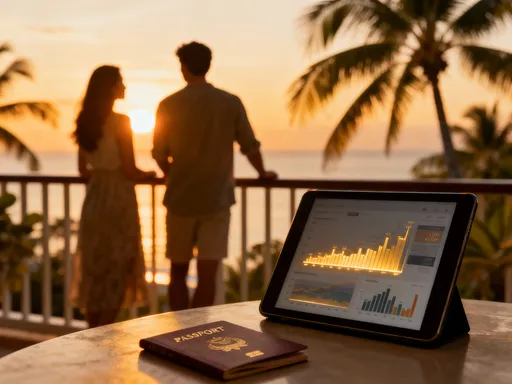
What if your honeymoon could do more than just create memories—what if it also helped your money grow? We once thought travel and financial gains were opposites, until we learned how smart planning can make them partners. This is the story of how we designed a dream trip while protecting and even growing our assets, using real strategies that balance joy and long-term thinking. No get-rich-quick schemes—just practical, tested choices that made both our hearts and bank account smile. It wasn’t about luxury at any cost, but about intentionality: choosing experiences that enriched our lives without compromising our future. Through disciplined budgeting, strategic funding, and passive income structures, we discovered that love and financial wisdom can travel hand in hand. This journey didn’t start with a windfall or a risky investment—it began with a simple realization: life’s most meaningful moments don’t have to come at the expense of financial peace.
The Moment We Realized Travel and Finance Don’t Have to Clash
For years, we viewed honeymoons—and vacations in general—as necessary indulgences, expenses that brought joy but drained resources. We believed that love and financial responsibility lived on opposite sides of a ledger. The idea of combining emotional fulfillment with asset growth felt unrealistic, even irresponsible. But everything changed after a conversation with a close friend who had recently returned from a trip to Italy. She didn’t talk about her photos or souvenirs—she talked about how she’d funded the trip using returns from a low-risk bond portfolio that continued earning while she was away. Her story challenged our assumptions. Was it possible that travel didn’t have to be a financial setback? Could we design a trip that didn’t just fit within our budget, but actually worked with it?
This shift in mindset was subtle but profound. We began to see that money is not just a store of value, but a tool for living well. The goal wasn’t to eliminate spending, but to align it with long-term objectives. We started asking different questions: instead of “Can we afford this trip?” we asked, “How can this trip fit into our financial plan without slowing progress toward our goals?” This reframing allowed us to move from guilt to strategy. We realized that skipping experiences out of fear could be just as damaging as overspending out of impulse. Financial health isn’t measured solely by savings rates—it’s also reflected in life satisfaction, balance, and the ability to enjoy milestones without regret.
The truth is, emotional well-being and financial stability are not enemies. In fact, they reinforce each other. When people feel in control of their finances, they experience less stress and make better decisions. When they allow themselves meaningful experiences, they build resilience and motivation to continue saving and investing. We began to treat our honeymoon not as a one-time expense, but as part of a broader financial rhythm—one that included saving, investing, protecting, and occasionally, celebrating. This wasn’t about justification or compromise; it was about integration. By viewing travel as a legitimate component of financial planning, we gave ourselves permission to enjoy life without derailing our future.
Mapping the Dream: Aligning Travel Goals with Financial Reality
Before we booked a single flight, we sat down to define what kind of trip we truly wanted. Was it luxury? Adventure? Culture? Relaxation? We each wrote down our top three priorities. Hers included a beachfront villa, a fine dining experience, and a couples’ spa day. His were hiking in nature, visiting historical sites, and trying local street food. At first glance, these seemed mismatched. But instead of compromising, we looked for destinations that could satisfy both sets of desires. We narrowed our list to places with coastal beauty, outdoor activities, rich history, and vibrant food scenes—options like Portugal’s Algarve region, coastal Croatia, and New Zealand’s North Island. Each offered a blend of relaxation and exploration, allowing us to maximize shared joy without overspending.
With destinations in mind, we moved to the next step: budgeting. We reviewed our financial picture—savings, monthly cash flow, investment accounts, and upcoming obligations. We set a hard limit: the trip would cost no more than 15% of our combined annual discretionary income, and we would not touch our emergency fund or retirement accounts. This boundary gave us clarity. We broke the budget into categories: transportation, accommodation, food, activities, insurance, and a 10% buffer for unexpected costs. Using historical pricing data from travel websites and personal finance tools, we estimated average daily costs for each location and compared them against our limit.
What surprised us was how visualizing the trip in financial terms reduced anxiety. Instead of seeing a vague, looming expense, we saw a structured plan. We used a simple spreadsheet to track projected versus actual costs, which helped us make confident decisions. For example, we realized that flying mid-week could save 20% on airfare, and booking accommodations three months in advance unlocked early-bird discounts. We also discovered that some luxury experiences—like a private sunset cruise—were more affordable during shoulder seasons. By aligning our dreams with data, we transformed wishful thinking into actionable strategy. This wasn’t about cutting corners; it was about spending wisely so we could enjoy more, not less.
Funding the Trip Without Derailing Our Future
One of our biggest fears was that funding the trip would mean pausing our investment progress. We didn’t want to dip into long-term accounts or take on credit card debt. Instead, we looked for ways to redirect existing funds without sacrificing growth. We began by reviewing our short-term investment vehicles—specifically, a portion of our portfolio allocated to low-volatility, liquid assets like money market funds and short-duration bonds. These had been earning modest returns, but we realized we could temporarily reallocate a segment of this capital toward the trip, knowing it would be replenished afterward.
We also optimized our cash flow. For six months leading up to the trip, we adjusted our monthly budget to increase savings by 12%. We did this by refinancing our auto loan to lower our monthly payment, canceling underused subscriptions, and switching to a more competitive high-yield savings account that boosted our interest earnings. These changes didn’t require major lifestyle cuts, but they added up. At the same time, we maximized travel rewards by using a cash-back credit card for everyday purchases, then paying off the balance in full each month. The accumulated points covered nearly half the cost of our international flights.
Perhaps the most empowering decision was to treat the trip as a planned withdrawal from our financial ecosystem, not a disruption. We didn’t stop investing; we simply adjusted the timing of certain allocations. For example, instead of making a large lump-sum contribution to our brokerage account in the third quarter, we directed that amount toward travel expenses. Because the market was relatively stable, we avoided selling positions at a loss. This approach allowed us to maintain our long-term investment pace while funding a short-term goal. We learned that financial flexibility isn’t about having endless money—it’s about having a system that allows you to adapt without panic.
Protecting Our Money While We’re Away
Once the excitement of departure set in, we realized how easy it would be to overlook financial risks. We had heard stories of travelers returning home to overdraft fees, fraudulent charges, or missed bill payments that damaged credit scores. We didn’t want a dream vacation to become a financial headache. So, before leaving, we took several protective steps. First, we notified our bank and credit card issuers of our travel dates and destinations to prevent transaction blocks. We also set up automated bill payments for recurring expenses like utilities, insurance, and mortgage to ensure nothing was missed while we were offline.
We established travel-friendly banking habits. We carried two debit cards from different institutions—one as a primary and one as a backup—and limited the amount of cash we withdrew at any one time. We used a bank that offered fee-free international ATM access and real-time transaction alerts via mobile app. These alerts were crucial; they allowed us to monitor activity daily and immediately report any suspicious charges. We also avoided public Wi-Fi for financial transactions and used a trusted virtual private network (VPN) when checking accounts from cafes or hotels.
Currency risk was another concern. Exchange rates fluctuate, and we wanted to avoid losing value through poor timing. Instead of converting all our money at once, we used a multi-currency travel card that allowed us to load funds in advance and lock in favorable rates. We also kept a small reserve in U.S. dollars for emergencies, knowing they are widely accepted in most tourist areas. These precautions weren’t born of paranoia—they were part of responsible stewardship. Just as we insured our trip against cancellations, we protected our finances against preventable losses. The peace of mind they provided was worth every minute of preparation.
Making the Money Work, Even on Vacation
One of the most liberating realizations was that our money didn’t have to stop growing just because we were on vacation. We structured our investment portfolio to include stable, income-generating assets that required no daily management. Before the trip, we reviewed our holdings and ensured they were diversified across sectors and geographies. We maintained exposure to dividend-paying stocks, bond funds, and low-cost index funds that historically provided steady returns with minimal volatility.
Our portfolio was designed for passive growth. We used a “set-it-and-forget-it” approach with automatic reinvestment of dividends and regular rebalancing. This meant that while we were hiking in the mountains or dining by the sea, our assets were still compounding. For example, one of our index funds distributed quarterly dividends during our absence, which were automatically reinvested to purchase additional shares. Over time, this snowball effect contributed meaningfully to long-term wealth accumulation.
We also avoided the temptation to check stock prices daily. Market noise can provoke emotional decisions, especially when you’re far from home and unable to act quickly. Instead, we relied on long-term performance metrics and trusted our financial advisor to monitor for any significant deviations. This discipline allowed us to stay present in the moment without financial anxiety. We learned that true financial freedom isn’t just about having enough—it’s about trusting your plan enough to enjoy life without constant oversight. The money kept working so we didn’t have to.
Lessons Learned: What We’d Do Differently Next Time
Despite our planning, we weren’t perfect. We underestimated the cost of local transportation and overbooked guided tours, leaving little room for spontaneous exploration. We also discovered that emotional spending—like buying souvenirs on impulse—can quietly erode a budget. One evening, after a romantic dinner, we purchased a piece of artisan jewelry that was well above our self-imposed souvenir limit. It was beautiful, but it came at the cost of skipping another planned activity the next day.
Looking back, we would build in more flexibility for unplanned joys. Instead of rigidly sticking to a daily spending cap, we’d create a “fun fund” within the overall budget—allocated for surprises without guilt. We’d also research local transportation options in advance and consider multi-day transit passes, which often offer better value. Another adjustment would be to start saving earlier. While six months was sufficient, nine to twelve months would have reduced monthly pressure and allowed us to capture higher interest earnings from longer-term deposits.
Perhaps the biggest lesson was the importance of emotional awareness in financial decisions. Even with a solid plan, feelings of excitement or nostalgia can influence spending. We now practice a 24-hour rule for non-essential purchases while traveling: if we see something we want, we wait a day before deciding. This simple pause has saved us from regrettable buys and helped us focus on experiences over objects. Growth isn’t about perfection—it’s about learning, adjusting, and moving forward with greater wisdom.
Turning One Trip into a Lifetime Habit
The honeymoon didn’t end when we returned home—it evolved into a financial philosophy. We now apply the same framework to every major life decision, whether it’s buying a home, planning a family vacation, or saving for a child’s education. The core principles remain: align desires with strategy, protect assets proactively, and let money work in the background through disciplined investing. We’ve learned that financial success isn’t measured by how much you sacrifice, but by how well you balance present joy with future security.
We’ve also become more intentional about goal-setting. Each year, we identify one or two meaningful experiences we want to have and build a dedicated savings plan around them. These aren’t afterthoughts—they’re priorities, just like retirement or emergency funds. By treating life goals as financial milestones, we create motivation to save and invest consistently. We’ve found that this approach reduces financial stress and increases overall satisfaction. When money serves your values, it becomes a source of empowerment, not anxiety.
Most importantly, we’ve learned that financial health is not a destination, but a practice. It requires ongoing attention, honest reflection, and the courage to make adjustments. But it also allows space for love, adventure, and connection. Our honeymoon taught us that a well-managed financial life doesn’t restrict freedom—it expands it. When you plan with clarity and act with confidence, you don’t have to choose between living fully today and securing your tomorrow. You can do both. And in that balance, we found not just a trip, but a way of life.